When to Visit Italy: A Month-by-Month Guide
The simplest answer to “when should I visit Italy?” is May and September. It’s the default recommendation, the weather and crowds genuinely cooperate, and you can’t go far wrong. But it’s also a flattening of the question. Italy stretches roughly from the Austrian border to the latitude of Tunisia, which means the right month depends much more on where you’re going than on Italy as a whole. May and early October are the safest defaults for a first trip covering Rome, Florence and Tuscany. April and November have got noticeably warmer over the past decade and are now real options across most of the country. August is mostly a mistake. The rest of this guide gets specific about which months work where, and which to avoid for what.
Italy’s seasons, in honest terms
Each season runs differently across the country, but the broad shape is the same: the north gets a proper four-season calendar; the south’s winters are mild and its summers extend by about a month on either side; Sicily and Sardinia operate by their own rhythm. What follows is what to expect by season, what’s good about each window, and what to plan around.
Winter (December to February)
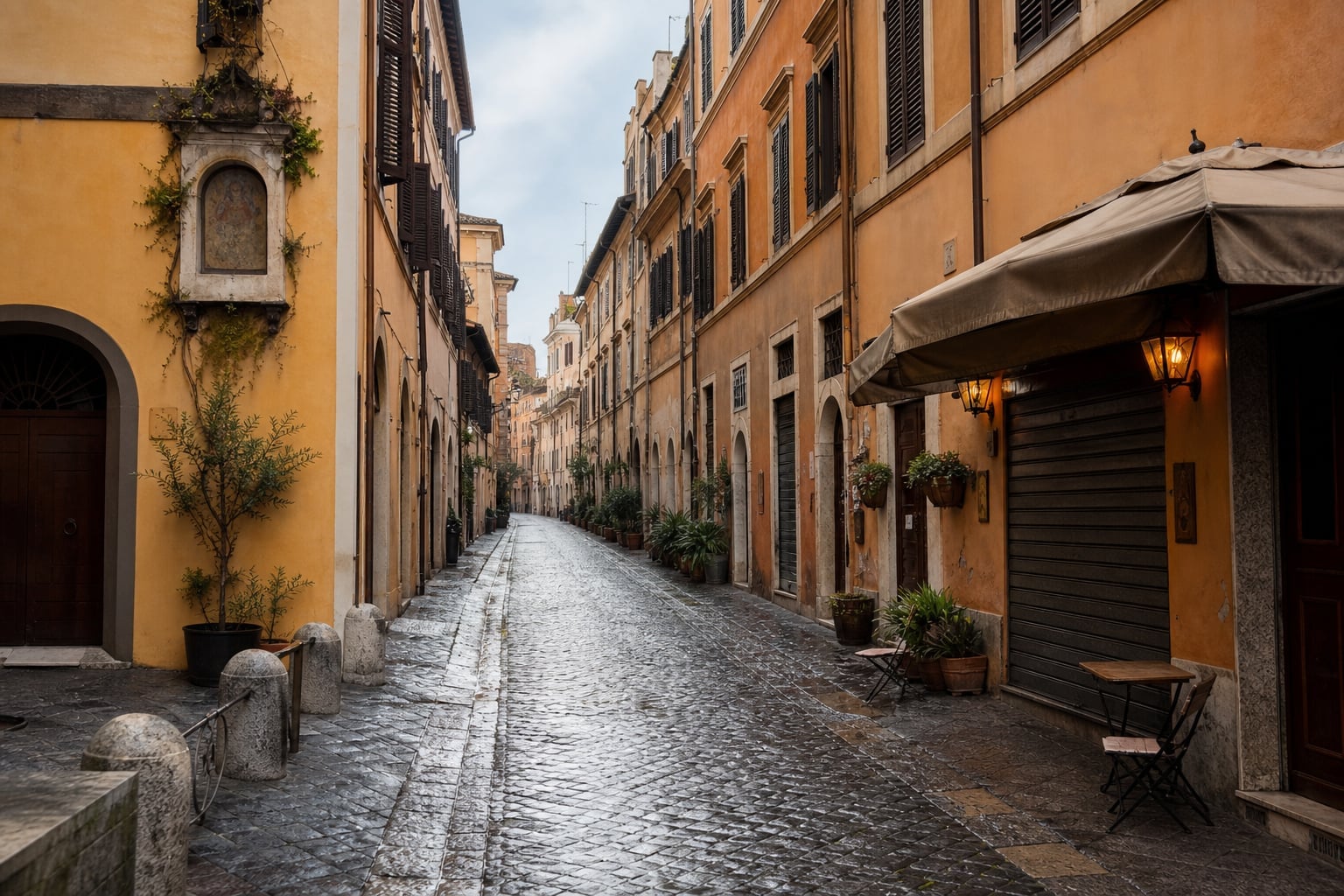
Italian winter is properly cold in the north and mild in the south, and the gap is bigger than most visitors expect. Milan and Venice average a daytime high around 6°C in January; the Dolomites are squarely in ski season with two metres of snow on the runs; Rome and Florence sit at about 12°C and feel like a damp British autumn; Sicily and the southern coast stay around 14°C and get genuine winter sun, sometimes warm enough to lunch outside.
What’s good about Italian winter: empty cities (except over the Christmas-to-New-Year window, see Christmas in Italy), hotel prices at their annual lows outside the ski resorts, and the proper truffle, panettone and ribollita season for food. Museums are quiet and the queues at the Uffizi or the Vatican that ruin July are gone by January. The light, when the sun is out, is the low golden winter light that photographs better than any other time of year.
What’s not: rain is a real factor in northern and central Italy from mid-November through February, with some cities getting fifteen rainy days in a typical December. The Dolomites get snow on roads that sometimes close mountain passes outright. Some smaller museums and restaurants in tourist towns close for the season; check before you commit. For the December weather angle in particular, see Italy in December.
Spring (March to May)
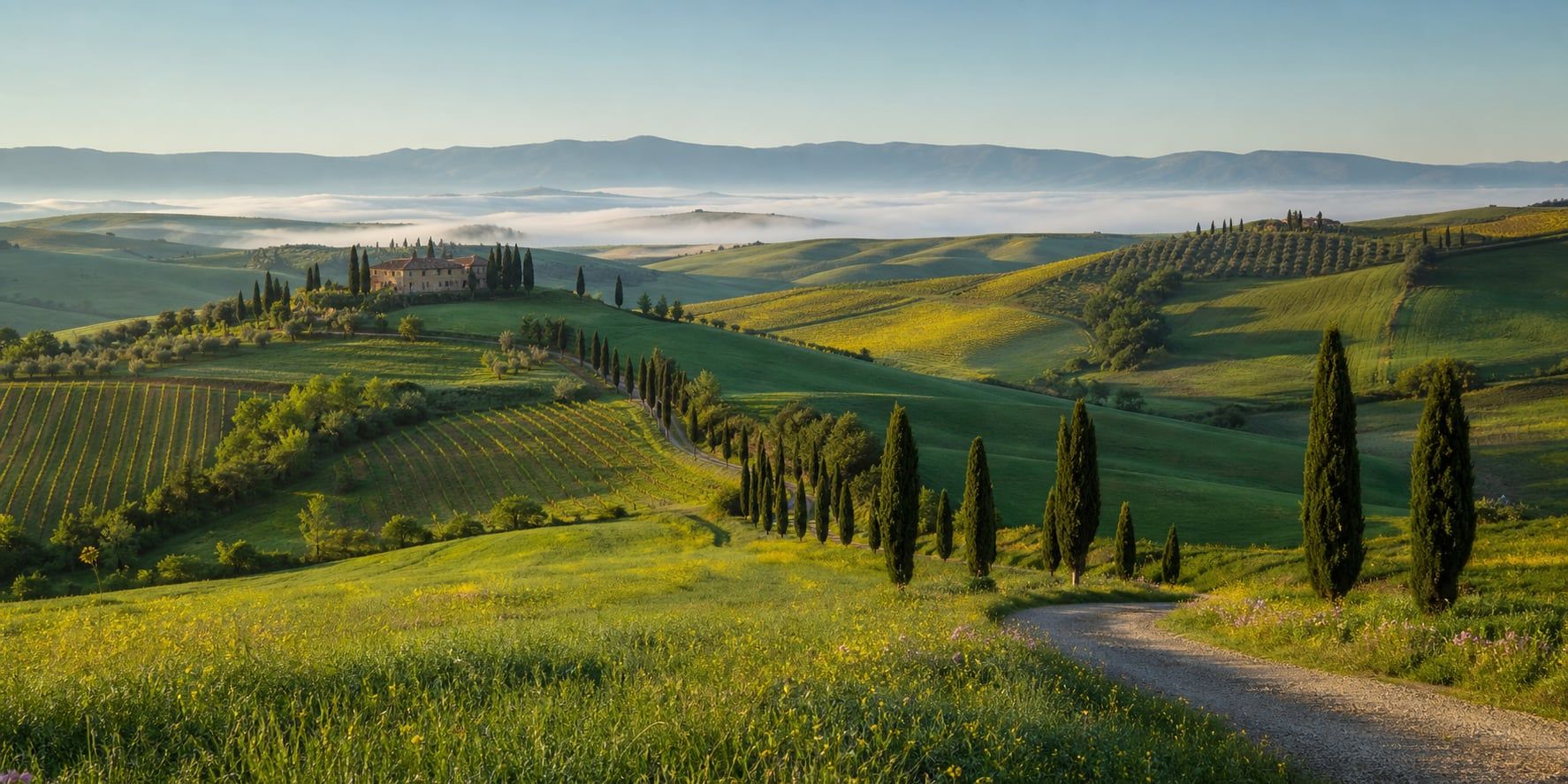
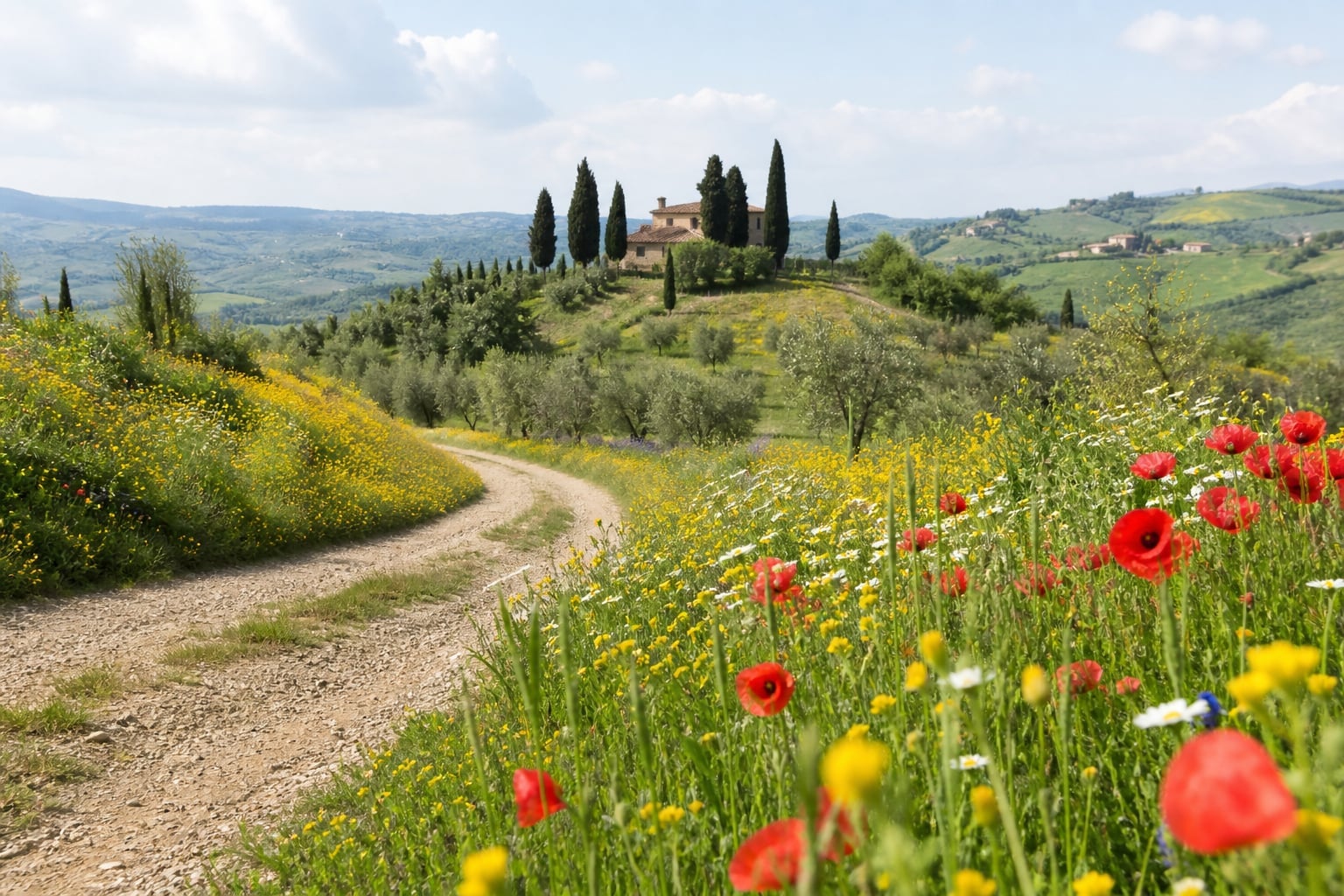
If there’s a single window when Italy is at its best, this is it. Late spring rolls through the country from south to north: April in Sicily and Apulia feels like high summer’s overture, with sea temperatures still cold but the air at 22°C and the wildflowers everywhere. By early May, central Italy joins in: the Tuscan countryside hits the green it’s been promising all winter, the temperatures sit comfortably at 22–24°C, and the light hangs long into the evening. Late May into early June is the high point for the lake district and the Dolomites’ lower altitudes.
What’s good about spring: weather you can plan around without a coat, sea swimming becomes possible from the second half of May in Sicily and Sardinia, and you’ve still got the season’s last cheap flights before the summer surge. Easter is the one variable: it draws a major crowd surge for the week itself but the few weeks before and after are quiet and excellent.
What’s not: the weather is still variable. A May trip can land in either 25°C blue-sky days or three days of cold rain; pack for both. Pollen season is real in some parts of central Italy. And April has surprisingly cold mornings everywhere north of Rome: pack a coat for the mornings even when the afternoons are warm.
Summer (June to August)
The honest summary of Italian summer is that what makes it famous (the long evenings, the swimming, the long-table dinners by the sea) lives at the coast and not in the cities. Rome in early July is reliably 30°C+ with high humidity; the Pantheon at 1pm in August is unbearable in a way that no photograph ever conveys. Florence and Venice are worse, partly because they’re smaller and there are fewer cooling courtyards and open spaces.
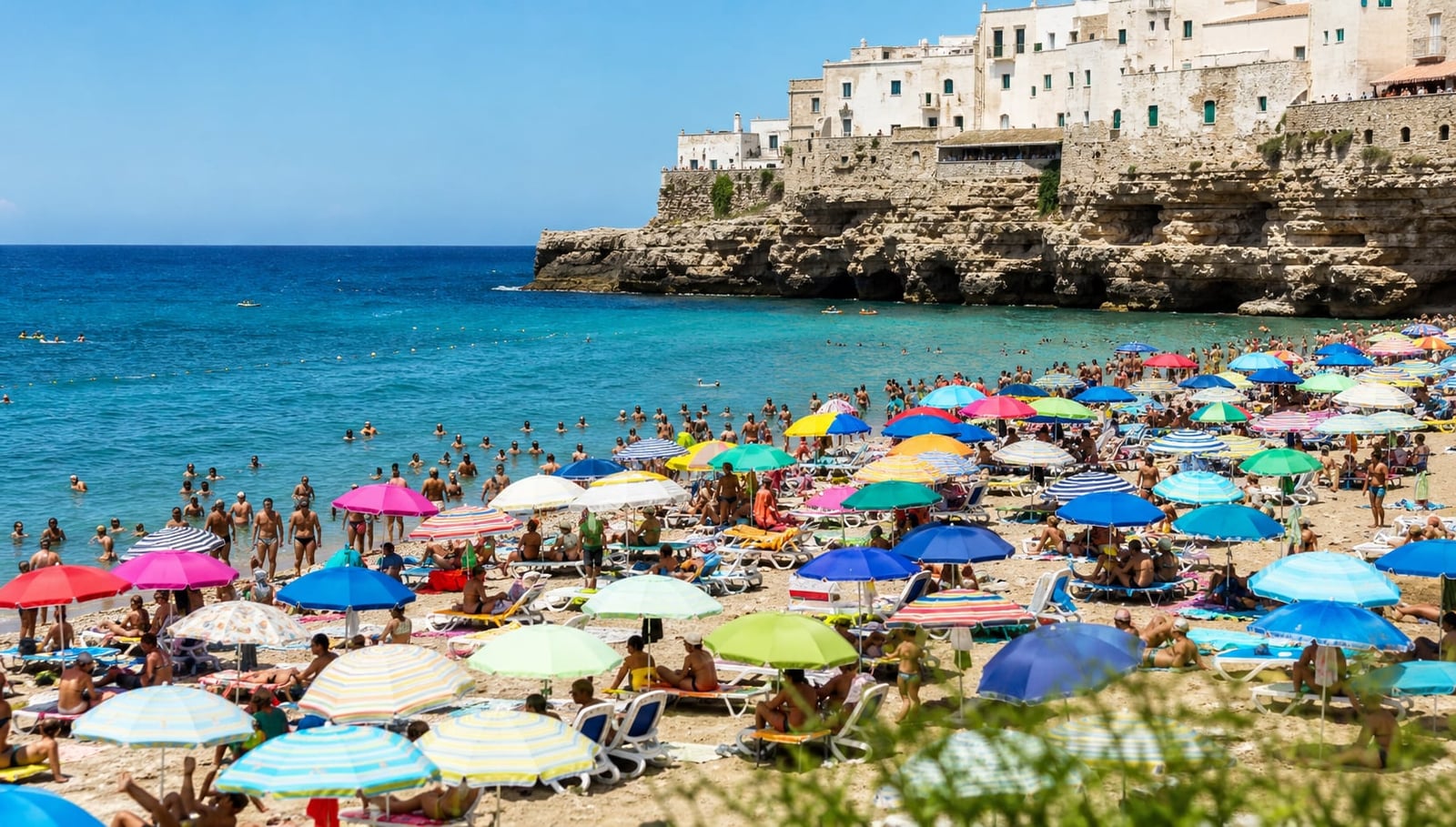
The coast is the trade-off. Italian families take their main summer holiday in August, traditionally clustering around Ferragosto (15 August). Sicily, Sardinia, the Amalfi Coast and Apulia fill up with Italians; prices in beach towns roughly double; the character swings from quiet seaside town to crowded family resort. Italians on holiday are a different kind of holiday-maker than tourists, and the August Italian beach is its own thing, worth experiencing for what it is rather than what it isn’t.
The single tactical point about August is the closure issue. Many Italian cities effectively shut down for the second half of the month: small restaurants, neighbourhood bars and family-run shops close for two or three weeks, sometimes putting up handwritten signs that say chiuso per ferie (closed for the holidays), often back open by the 30th. Trains run at full capacity; the ZTL (restricted-traffic zone) restrictions still apply in city centres even when half the city isn’t there to enforce them. The full picture is in Italy in August.
Autumn (September to November)
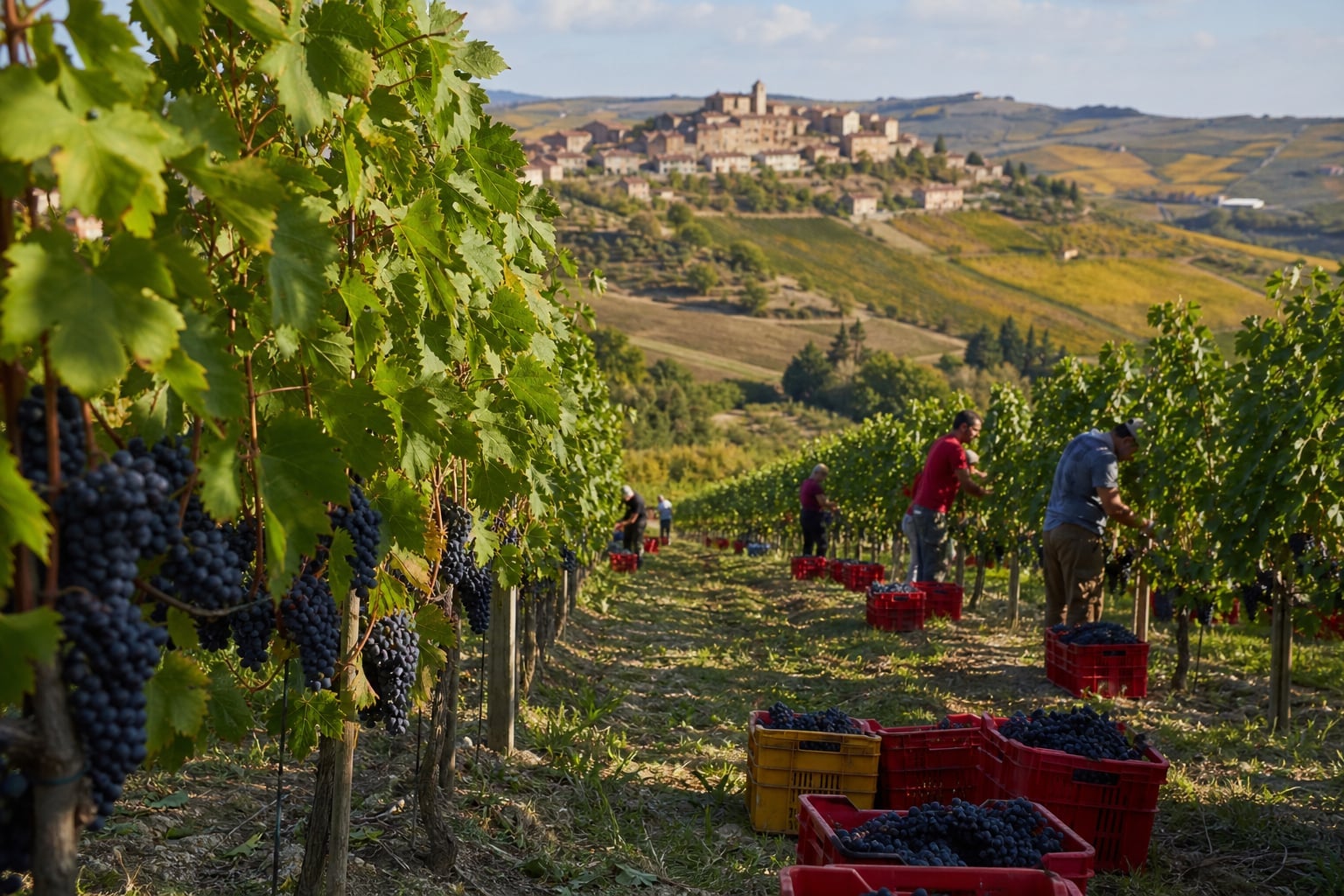
If forced to pick one month, most Italians who travel will tell you it’s September. The weather is still summery by northern European standards (the warm seas of the south keep that coast swimming into October), the crowds have thinned dramatically once Italian schools reopen on the second week, prices have dropped, and a season’s worth of grape and olive harvests are about to begin or under way. Late September is the start of vendemmia (the wine harvest) across most of Italy; October is olive-harvest season further south.
October is the second sweet spot. The first half is reliably warm (22–23°C in Rome at midday, sea swimming still pleasant down south); the second half cools quickly, and by Halloween the days are short and frequently wet. November is the surprise: it’s the quietest month of the year in most cities, prices are at winter levels, and the wet weather has become more sporadic than the November of twenty years ago. The deep dive on the best October weather, what’s still open, and where to base is in Italy in October.
What to know: October has reliable Italian weather but variable European weather, which matters for flights. If you’re flying via Frankfurt or Amsterdam, an October trip can get disrupted by storms at the connection point that have nothing to do with Italy itself. November is increasingly a value play but expect grey and rain. And the wine and food festivals (sagre) that fill Italian autumn weekends are real local events worth planning around if you have flexibility.
A regional view: where Italy’s seasons feel different
Italy isn’t one climate. From the Alpine border in the north to Sicily in the south, the country spans something like eight degrees of latitude (roughly the same distance as London to Madrid). The seasonal calendar shifts noticeably as you move between them.
The Dolomites and the Alps operate on a ski calendar: their peak seasons are January through March (ski) and July into early September (alpine summer with hiking, lakes and high meadows). The shoulder months that work elsewhere in Italy are mud season here. The autumn colours of the Dolomites in October are spectacular but the high passes can already be closed.
Tuscany, Umbria, the Marche and the rest of central Italy have the broadest shoulder seasons. Late April to mid-June and late September to late October are both excellent. Mid-summer is hot but bearable inland; the coast (Tyrrhenian and Adriatic both) packs out from late July onwards.
Rome and Lazio get a noticeable extra month of warm-enough-for-everything weather compared to the centre: late October still feels like proper autumn, and Mediterranean April is reliable. Roman August, however, is its own category of unbearable.
The south (Naples, Apulia, Calabria) gets a fortnight or so of extra warm season on either side: April is full spring, May feels like northern Italy’s June, and September into October stays summer-warm. Winter rain is more sporadic than in central Italy.
Sicily and Sardinia run on their own calendar. Sicily has genuine winter sun: January in Palermo can hit 18°C in the afternoon, and the almond blossom in the Agrigento area starts in early February. Sea temperatures hold above 20°C into October; some October days are still swimming weather. The high summer heat is real but it’s a dry heat compared to the cities further north.
Italy at a glance, month by month
A single frame: typical daytime highs and overnight lows by region, crowd levels, and what’s particular to each month.
| Month | North (Milan/Venice) | Centre (Rome/Florence) | South (Naples) | Sicily | Crowd level | Notable |
|---|---|---|---|---|---|---|
| Jan | 6° / 0° | 12° / 3° | 14° / 7° | 15° / 9° | Very low | Off-season prices; sales |
| Feb | 8° / 2° | 13° / 4° | 14° / 8° | 16° / 9° | Very low | Carnival week peaks |
| Mar | 13° / 4° | 16° / 6° | 17° / 9° | 18° / 11° | Low | First spring; rain still likely |
| Apr | 17° / 8° | 19° / 10° | 19° / 12° | 21° / 12° | Medium | Easter is a peak week |
| May | 22° / 12° | 23° / 13° | 23° / 15° | 24° / 15° | High | First reliable sweet spot |
| Jun | 26° / 16° | 28° / 17° | 27° / 19° | 28° / 19° | Very high | Cities hot; coast filling |
| Jul | 29° / 18° | 31° / 19° | 30° / 21° | 31° / 21° | Peak | Avoid cities at midday |
| Aug | 28° / 18° | 31° / 19° | 31° / 22° | 32° / 22° | Peak (Italian mix) | Closures in cities |
| Sep | 24° / 15° | 27° / 16° | 28° / 19° | 28° / 19° | Medium-high | Best month for most |
| Oct | 18° / 11° | 22° / 13° | 23° / 15° | 25° / 15° | Medium | Second sweet spot |
| Nov | 11° / 6° | 16° / 8° | 18° / 11° | 20° / 12° | Low | Quiet, often wet |
| Dec | 7° / 2° | 13° / 5° | 15° / 9° | 17° / 11° | Low (except holiday week) | Christmas markets |
Temperatures are typical monthly daytime highs and overnight lows from the standard 30-year climate normal. For the high Alps and the Dolomites, subtract roughly 8–10°C from the North figures. Recent years have run warmer than the long-term average: expect 1–2°C above these figures in summer in particular.
Sources and method
Temperature figures throughout are typical monthly averages drawn from the Italian Aeronautica Militare meteorological service and regional ARPA agencies (Lombardy, Lazio, Sicily and others), against the standard 30-year climate normal. Where recent years deviate, the most significant shift has been warmer summers and milder autumns.
Crowd-level descriptions reflect observed conditions at central tourist sites in Rome, Florence and Venice. Smaller centres and the south generally run cooler in tourism terms even in peak months. Italian school holidays (late June to mid-September) drive most of the August coast pressure and the September empty-out.
Public-holiday and event dates are from the Italian government’s official calendar (the calendario delle festività civili) and the regional tourism boards for sagre and food-festival dates.
Explore this topic
- Italy in August: Heat, Ferragosto, and Where the Month Actually Works: Italy in August, honestly. The heat by region, Ferragosto and the closures, where August works (coast, islands, alpine summer) and where it doesn't (the famous cities).
- Italy in October: Weather, Crowds and Where to Go: Italy in October, in honest terms. How the weather actually splits the month, where the shoulder season works best, and what to plan around.
- Italy in December: Weather, Where to Go, and What to Expect: Italy in December, by region. How the weather actually splits north to south, where the month works best, what closes when, and how the Christmas week reshapes everything.
Frequently asked questions
When is the best time of year to visit Italy?
For most travellers, May (late spring) and September into early October (early autumn) are the best months: warm enough for full sightseeing days, cool enough for walking, and on either side of the summer crowd peak. April and November are increasingly viable as climate change pushes the shoulders warmer.
What is the cheapest month to visit Italy?
January and February (excluding the Carnival week in late February) are cheapest for flights and hotels in non-ski destinations. November is the runner-up. Avoid Easter week, Ferragosto in mid-August, and the week between Christmas and New Year. All are pricing peaks.
Is Italy crowded in summer?
Yes, especially July in the cities (Rome, Florence, Venice peak before Italians themselves go on holiday) and August on the coast (when Italian families take their main holiday around Ferragosto, 15 August). The exception is Italian cities in the second half of August, which empty out as residents leave for the coast: quiet but with many shops and restaurants closed.
What is the best month to visit Italy?
If forced to pick one, September. The weather is still summer-warm but school-holiday crowds have just gone, prices have eased, and the wine harvest (vendemmia) and autumn food festivals are about to start. May is a close second.