Christmas in Italy: Traditions, Markets and What to Expect
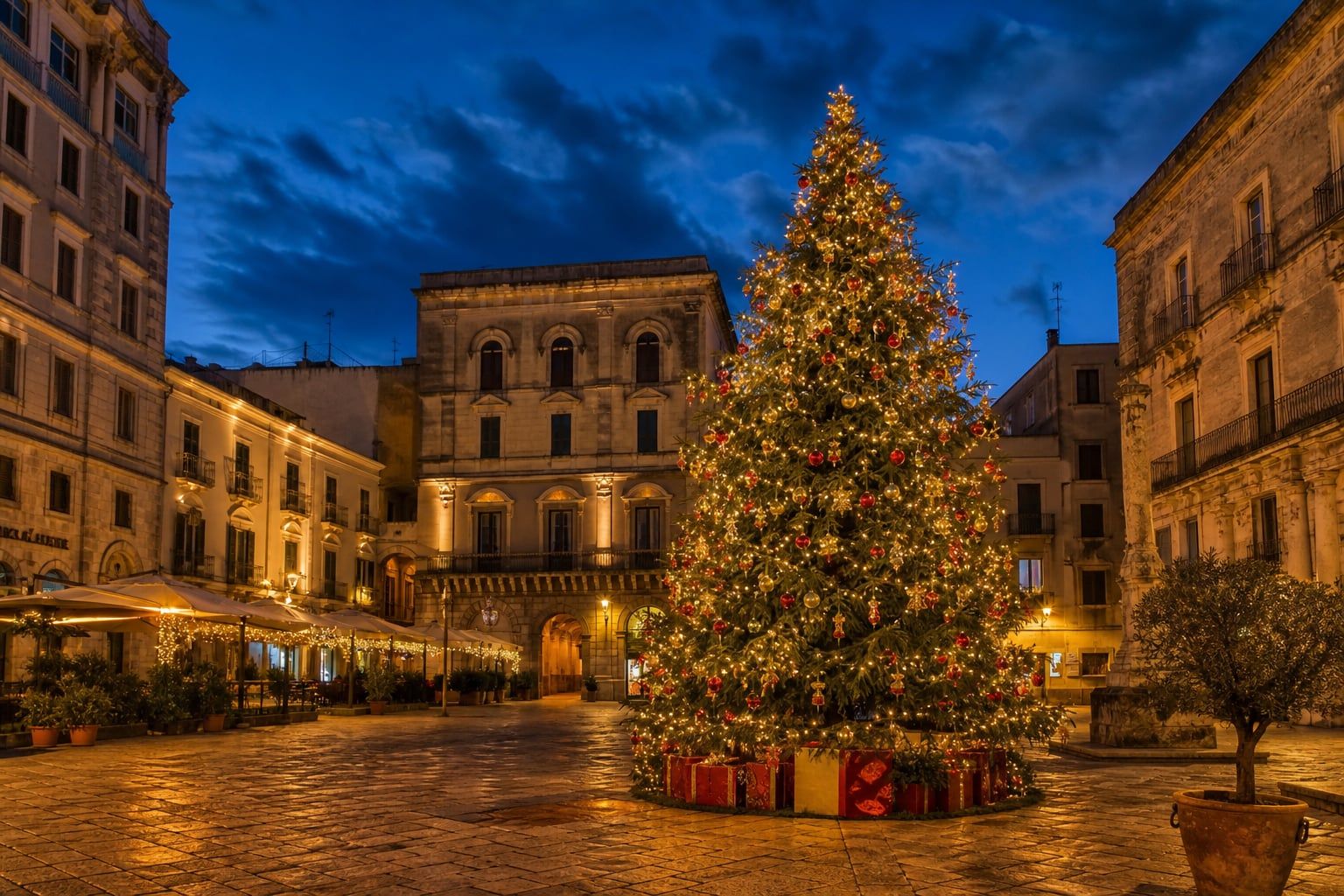
The Italian Christmas season runs longer than most visitors expect. It opens on 8 December with the Immacolata (the Immaculate Conception, a national public holiday and the day most cities switch on their Christmas decorations) and runs through to 6 January, when La Befana closes the season with a final round of presents from a kindly witch. The thirty days in between are dense with regional traditions, religious observance, family-meal culture, and the year’s most concentrated burst of food and music. This is the practical and cultural guide to the season: when things happen, what gets eaten and where, what the markets are like, and what to know about the public holidays. For the weather, costs and broader December-planning angle, see Italy in December; for the year-round shape of Italian travel, see When to Visit Italy.
The shape of the Italian Christmas season
The Italian Christmas season has a distinct calendar shape. It doesn’t really start in mid-November (as in much of the UK and US) and it doesn’t really end on 26 December (as in much of northern Europe). The dates that matter:
- 8 December. The Immacolata (Immaculate Conception) national holiday. Christmas lights and trees go up across Italian cities around this date; the Christmas markets that started in late November hit their stride. The Vatican unveils the year’s Christmas tree in St Peter’s Square (the tree is donated by a different country or region each year).
- 13 December. Santa Lucia. Celebrated more strongly in the north (especially Verona and Bergamo) than in the south. In some northern traditions, Santa Lucia rather than Babbo Natale (Father Christmas) brings the children’s presents on this date.
- 24 December. Vigilia di Natale (Christmas Eve), the cultural centrepiece. The long fish-based dinner (the Cenone della Vigilia) is the year’s most important family meal.
- 25 December. Natale. A quiet day at home with family. Most restaurants and shops closed.
- 26 December. Santo Stefano. Public holiday. The visiting and leftovers day.
- 31 December. San Silvestro. The end-of-year cenone, fireworks, late evenings.
- 1 January. Capodanno. Public holiday, quiet day.
- 6 January. Epifania. Public holiday and the official end of the Christmas season. La Befana brings the final children’s presents.
That last date is genuinely important: the Italian Christmas runs to Epiphany, not Boxing Day. School holidays don’t end until after the 6th. The lights stay on; the markets in some northern cities run until the 6th too.
The Christmas markets
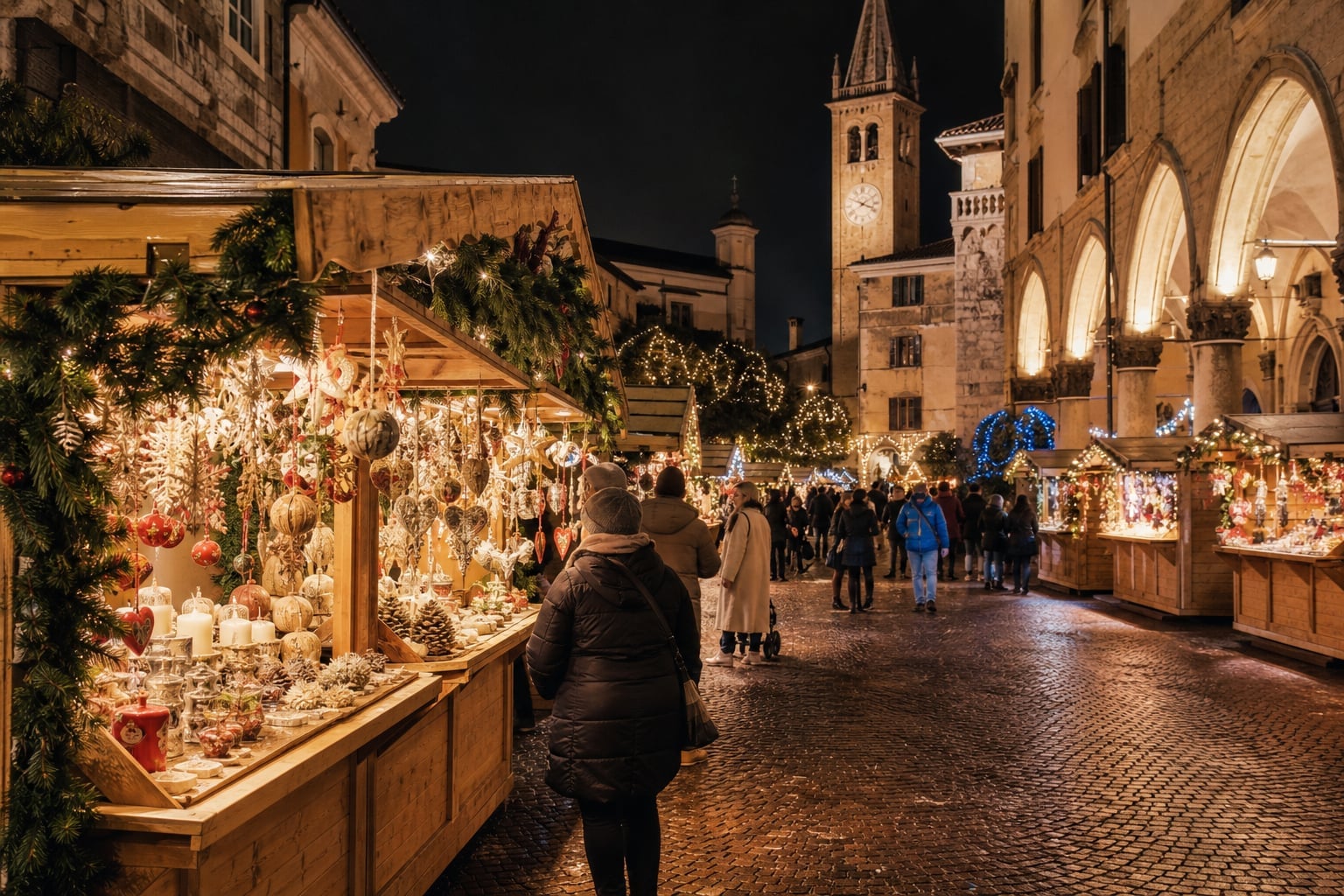
Italy’s Christmas markets are concentrated in the German-speaking and historically Habsburg parts of the country: the South Tyrol (Alto Adige), Trentino, the Veneto, and parts of Friuli. They’re closer in style to Austrian and German markets than to anything else in Italy, which makes sense given the shared cultural roots.
The big four to know:
Bolzano (Alto Adige). The biggest and best-known of the Italian Christmas markets, in the centre of a German-speaking Italian city. Opens late November, runs through 6 January. Around eighty stalls in Piazza Walther, glühwein in heavy mugs, strauben (the local fried-dough sweet), wooden Tyrolean decorations, and a calendar of concerts in the surrounding churches.
Trento. Smaller and more compact than Bolzano, in the medieval centre. Opens around the third week of November. Strong on local food (Trentino cheeses, speck, cured meats) alongside the standard market fare.
Bressanone (Brixen). The oldest of the bunch (running since the 1990s) and the most atmospheric, set against the medieval Episcopal Palace. Smaller crowds than Bolzano.
Merano (Meran). Compact and walkable, blending into the spa-town setting. The market wraps along the river through the historic centre.
Beyond Alto Adige, smaller markets run in most northern cities (Milan, Verona, Florence, Venice), but they’re a different proposition, closer to a generic European Christmas market than to the German-Italian hybrid of the South Tyrol.
Italian Christmas food
Italian Christmas is heavily food-oriented, but the food differs significantly between Christmas Eve and Christmas Day.
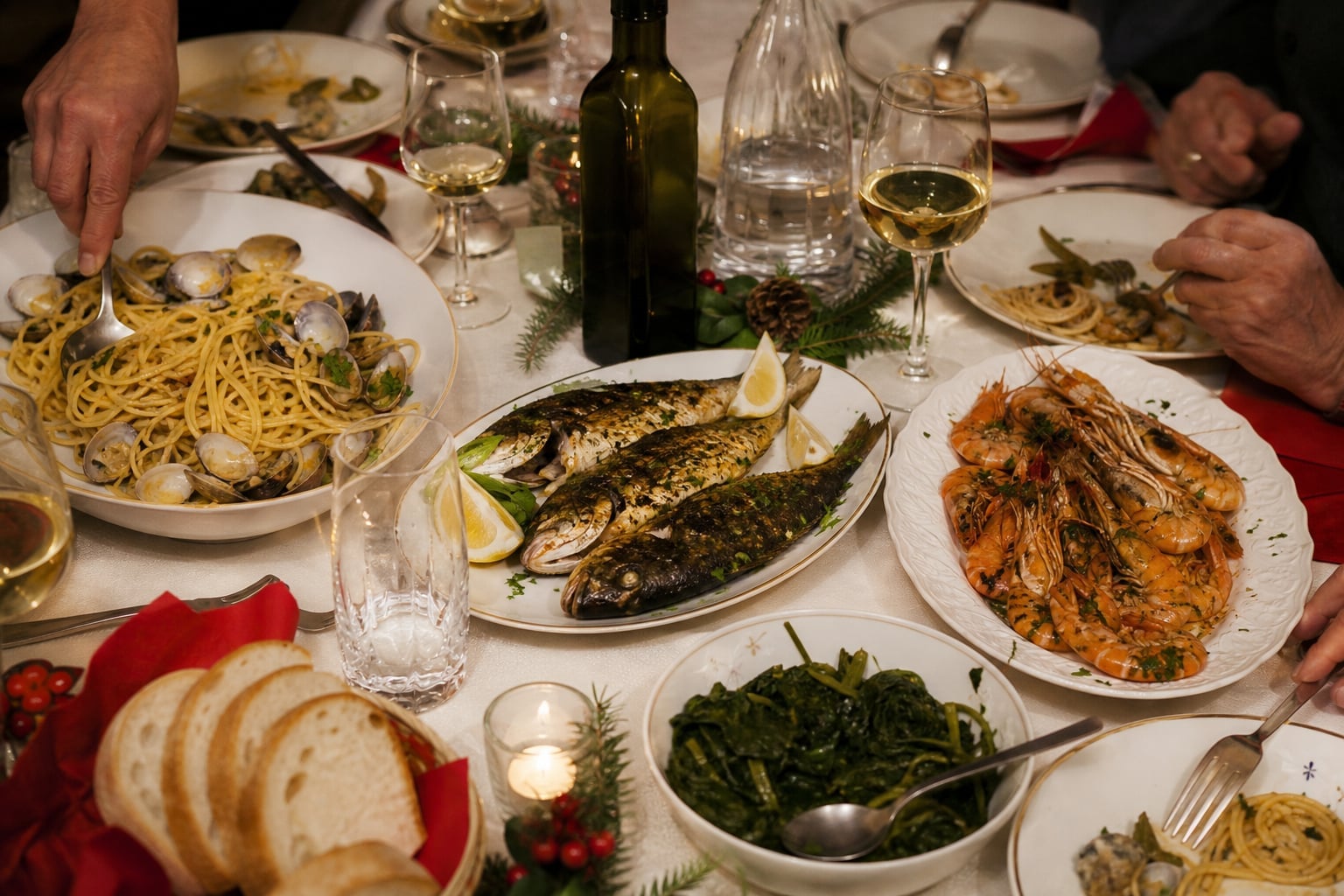
Christmas Eve: the Cenone della Vigilia. Traditionally a fish-based meal, rooted in the Catholic practice of abstaining from meat on the eve of a feast day. The American “Feast of the Seven Fishes” is an Italian-American formalisation of an Italian tradition that doesn’t strictly count fish in Italy itself, but the principle is the same: a long, multi-course fish-and-seafood dinner that runs late into the evening.
Typical courses: an antipasto of cured fish or seafood salads; a primo of pasta with fish (spaghetti alle vongole, linguine al cartoccio, risotto di mare); a secondo of baked or fried fish (frittura di mare, baked sea bass or sea bream); panettone or pandoro for dessert. The meal goes on for hours; the children stay up; Midnight Mass follows for those observing.
Christmas Day: the Pranzo di Natale. Meat-centred. The traditional dishes vary by region but the structure is the same: long lunch, extended family, multiple courses.
- In the north: cappelletti or tortellini in brodo (stuffed pasta in broth) for the primo; bollito misto (mixed boiled meats) or roast capon for the secondo.
- In central Italy: agnolotti or cannelloni for primo; roasted lamb, capon, or trippa depending on the family tradition.
- In the south: pasta al forno (baked pasta), lamb or pork for the secondo; struffoli (small fried-dough balls in honey) in Naples for dessert.
Panettone and pandoro. Universal across Italy at Christmas. Panettone (the dome-shaped sweet bread, originally Milanese, with candied fruit and raisins) and pandoro (Veronese, taller, star-shaped, vanilla-rich) are the two canonical Christmas cakes. The artisan-versus-supermarket debate is genuinely cultural; Italian newspapers run feature pieces every December comparing brands and bakeries.
Symbols and distinctly Italian traditions
A handful of Christmas traditions that are particularly Italian and worth understanding before a December visit.
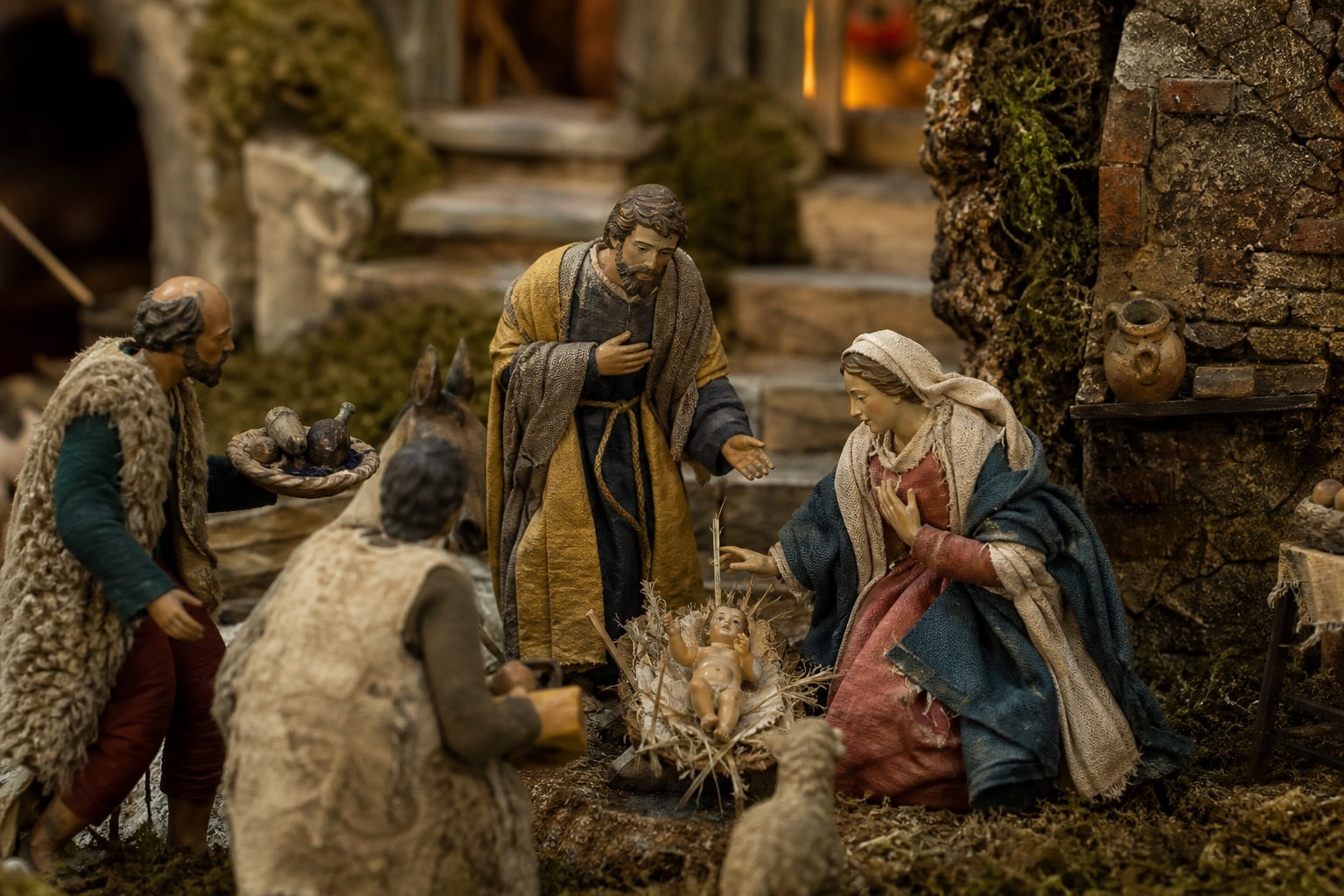
The presepe. The Christmas Nativity scene, elevated to art form in Naples in particular. Neapolitan presepi have been a continuous tradition since the 18th century; the figures are made by hand by craftsmen on Via San Gregorio Armeno (a single street in Naples lined with presepe workshops). The Naples presepe traditionally includes contemporary public figures alongside the Holy Family: a current politician, a footballer, a local celebrity. The joke is built into the tradition. The street is busy any time and at its peak in December.
La Befana. The benign witch who visits on the night of 5 January (Epiphany Eve), bringing presents to good children and carbone dolce (sweet “coal”, actually a black candy) to less-good ones. She’s the Italian Father Christmas equivalent, though the gifts are smaller and the role is shared with Babbo Natale, who arrives on Christmas Eve.
The zampognari. Bagpipers (yes, in Italy) from the Abruzzo and southern mountains who traditionally walk the streets of Rome, Naples and other southern cities in the days before Christmas, playing traditional shepherd music. The tradition has pre-Christian roots layered onto Christmas in the medieval period. Less common than fifty years ago but still seen in Rome’s centro storico in the week before 25 December.
Midnight Mass and the Pope. Christmas Eve Midnight Mass at St Peter’s Basilica is celebrated by the Pope and is a major event. Tickets are free but must be requested in advance through the Prefettura della Casa Pontificia. Most major Italian churches also hold midnight masses; the cathedral in any city is the place to look.
What’s open and closed: the practical bit
The practical implications of the Italian Christmas calendar on a visit.
The week leading to Christmas (16–24 December). Cities are at their most festive: lights, markets, late shopping hours. Public transport runs normal schedules until the 24th. Restaurants book out fast for the Christmas Eve dinner; if you want to eat out on the 24th, book by mid-December.
Christmas Eve (24 December). Most offices and many shops close in the afternoon. Restaurants are nearly all booked for the cenone; visitor-facing restaurants in tourist zones may open with set menus.
Christmas Day (25 December). Most things closed. Major museums often shut for the day (the Uffizi, the Vatican Museums); some hotels run a Christmas-lunch service; the major churches hold their Christmas services. The Pope’s Urbi et Orbi blessing from St Peter’s at midday is a free public event drawing significant crowds in Rome.
Santo Stefano (26 December). Public holiday but more things open. Many restaurants return to service.
The week between Christmas and New Year. Hotel pricing in Rome, Florence, Venice and the Christmas-market cities at its annual peak. Book everything in advance. Sights open but busy. Transport runs near-normal schedules.
Epiphany (6 January). Public holiday. Last day of Christmas decorations and markets in most cities. School holidays end after this day.
The honest call
Italy in the Christmas season is its own thing, different from the country in any other month. The food culture, the church culture, the family-meal scale and the long calendar (8 December onwards through 6 January) all change the texture of a visit. It works best as a destination if you come specifically for the December experience: the markets, the food, the lights, the regional Christmas Eve dinner, the presepe tradition. It works less well as a generic Italy trip in disguise, because the country isn’t operating in tourist mode in the way it does in spring or autumn.
If you’re more flexible on dates and want general Italy travel rather than the Christmas season specifically, Italy in October makes the case for the easier shoulder month. For the summer counterpart to the Italian Christmas, when family observances and widespread closures shape the country in much the same way, see Italy in August. For the practical December angle (weather by region, costs, ferry and transport changes, where in the country to base), see Italy in December. For the year-round shape of Italian travel, see When to Visit Italy: A Month-by-Month Guide.
Frequently asked questions
When does the Christmas season start in Italy?
The Italian Christmas season officially opens on 8 December with the Immacolata (Immaculate Conception), when cities turn on their Christmas decorations and the markets that started in late November hit their stride. The season runs through to 6 January (Epifania), when La Befana brings the final children's presents. School holidays don't end until after Epiphany, which makes the Italian Christmas calendar noticeably longer than the British or American one.
What do Italians eat on Christmas Eve?
Christmas Eve in Italy is fish-based, in the Cenone della Vigilia tradition rooted in the Catholic practice of abstaining from meat on a feast eve. A typical menu runs to several courses: antipasto of cured fish or seafood salads, a primo of pasta with fish (spaghetti alle vongole, linguine al cartoccio, risotto di mare), a secondo of baked or fried fish, and panettone or pandoro for dessert. The meal goes on for hours, often followed by Midnight Mass.
What are Italian Christmas traditions?
The most distinctive Italian Christmas traditions are the long fish-based Christmas Eve dinner (the cenone), the elaborate Nativity scenes (presepi, especially in Naples on Via San Gregorio Armeno), La Befana (the benign witch who brings presents on 6 January), and the regional Christmas-market culture of the South Tyrol (Bolzano, Merano, Bressanone, Trento). Children's gifts are split between 25 December and 6 January in many families.
Who is La Befana?
La Befana is the kindly old witch who visits Italian children on the night of 5 January (Epiphany Eve), bringing presents to those who've been good and carbone dolce (sweet coal) to those who've been less good. She's the Italian Father Christmas equivalent, though the gifts are smaller and the role is shared with Babbo Natale (who comes on Christmas Eve). La Befana closes the Italian Christmas season.